
Chapter 1
IN THIS LESSON
Procedural Fairness
Procedural fairness is one of the fundamental principles that guides the Ochapowace Community Tribunal. It means that before a decision is made that could affect a person's rights, interests, or privileges, the process must be fair, impartial, and respectful.
Procedural fairness is not about whether the Tribunal reaches the "right" outcome. It is about ensuring that every person is given a meaningful opportunity to participate in the decision-making process. A fair process promotes transparency, accountability, and confidence in the Tribunal.
Every case is different. The level of procedural fairness required depends on the nature of the decision, its impact on the individual, and the requirements of the law.
Restorative Justice, Peace, Order and Good Governance.
What is Procedural Fairness?
Procedural fairness is one of the fundamental principles that guides the Ochapowace Community Tribunal. It means that before a decision is made that could affect a person's rights, interests, or privileges, the process must be fair, impartial, and respectful.
Procedural fairness is not about whether the Tribunal reaches the "right" outcome. It is about ensuring that every person is given a meaningful opportunity to participate in the decision-making process. A fair process promotes transparency, accountability, and confidence in the Tribunal.
Every case is different. The level of procedural fairness required depends on the nature of the decision, its impact on the individual, and the requirements of the law.
When is Procedural Fairness Required?
Procedural fairness is required whenever the Tribunal makes a decision that may affect a person's rights, interests, or privileges. This includes decisions involving election appeals, grievances, code of conduct complaints, or any matter that could affect an individual's position, reputation, or participation in the community.
Not every decision requires the same level of procedural fairness. The more significant the impact on the individual, the greater the procedural protections that are generally required. Decisions with serious consequences may require greater notice, disclosure of information, an opportunity to be heard, and detailed reasons for the decision.
When determining whether procedural fairness applies, the Tribunal considers:
The nature of the decision – Is the decision about a specific individual or a general policy?
The relationship between the Tribunal and the individual – Is the Tribunal exercising authority under Ochapowace law?
The impact of the decision – How significantly will the decision affect the individual's rights, interests, or privileges?
These principles help ensure that every person appearing before the Tribunal receives a process that is fair, respectful, and proportionate to the importance of the decision being made.
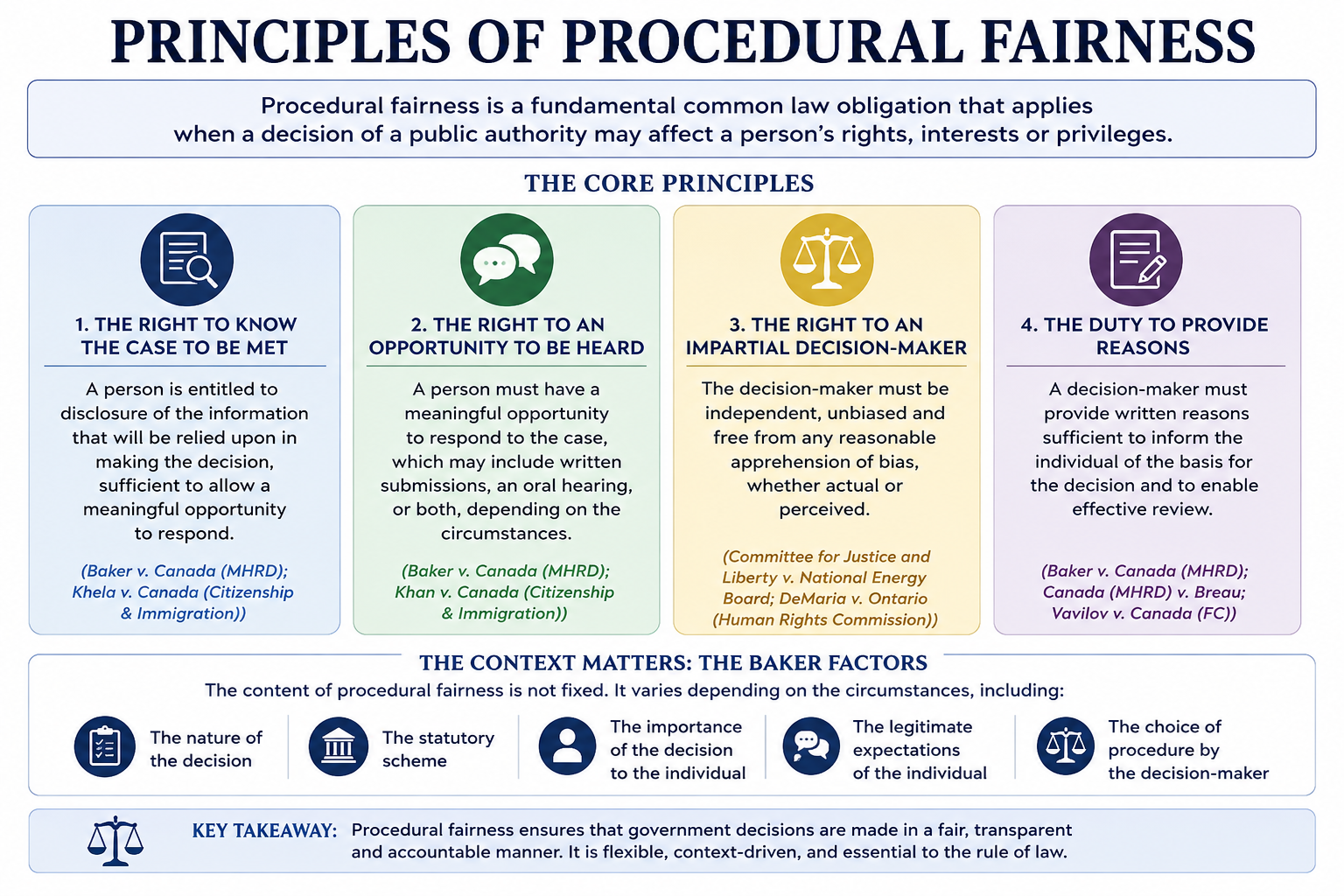
The Principles of Procedural Fairness
Notice
Individuals should receive notice of the allegations or issues before the Tribunal and be informed of the hearing process.
Disclosure
Parties should be provided with the information and evidence that the Tribunal intends to rely upon so they have a meaningful opportunity to respond.
The Right to be Heard
Every person should have a reasonable opportunity to present their side of the matter. Depending on the circumstances, this may occur through written submissions, an oral hearing, or both.
An Impartial Decision-Maker
Tribunal members must approach every matter with an open mind. Decisions must be free from bias, conflicts of interest, or any reasonable perception that the outcome has been predetermined.
Reasons for the Decision
The Tribunal should explain the reasons for its decision so that the parties understand how the decision was reached and can have confidence that all relevant information was considered.
Procedural fairness is not a "one-size-fits-all" process. More significant decisions generally require greater procedural protections. For example, a decision that could remove an elected official from office requires a more robust process than a routine administrative matter.
The Tribunal considers factors such as:
The seriousness of the decision
The impact on the individual
The governing legislation
The procedures established by the Tribunal
The need to ensure a fair and efficient process
Our Commitment
The Ochapowace Community Tribunal is committed to conducting proceedings that are fair, respectful, transparent, and consistent with the principles of procedural fairness. Our goal is to ensure that every person who appears before the Tribunal has an opportunity to be heard and that decisions are made independently, impartially, and in accordance with the law.
-
Add a short summary or a list of helpful resources here.